
A person is in charge,
and three things can stop it.
Three people usually decide whether a machine gets a robot in the seat: the safety officer, the maintenance lead and legal. This page answers all three, and it gives each of them the same answer.
What each line means on the machine.
- AI plans. The planner reads the situation and proposes a course of action. It never invents the procedure for it.
- Rules govern. Machine limits, site rules and job rules decide what is allowed, and the response to each situation is fixed in advance, not improvised.
- Humans authorize. Hard safety limits outrank every person, and every person outranks the software. Anyone at the machine can override anything downstream of them.
- Safety has veto. Safety stops the system without asking the software. Sensing can stop the machine. It can never start it.
A person starts the machine, every session.
A human walks around the machine, completes the pre-start inspection, starts it and clears it for operation. Only then does Eddie engage the controls: every session, every machine, no exceptions. Eddie never starts, wakes or inspects a machine.
Nobody can change that setting, because it is not a setting. Nobody arrives in the morning to find a machine that woke itself up.
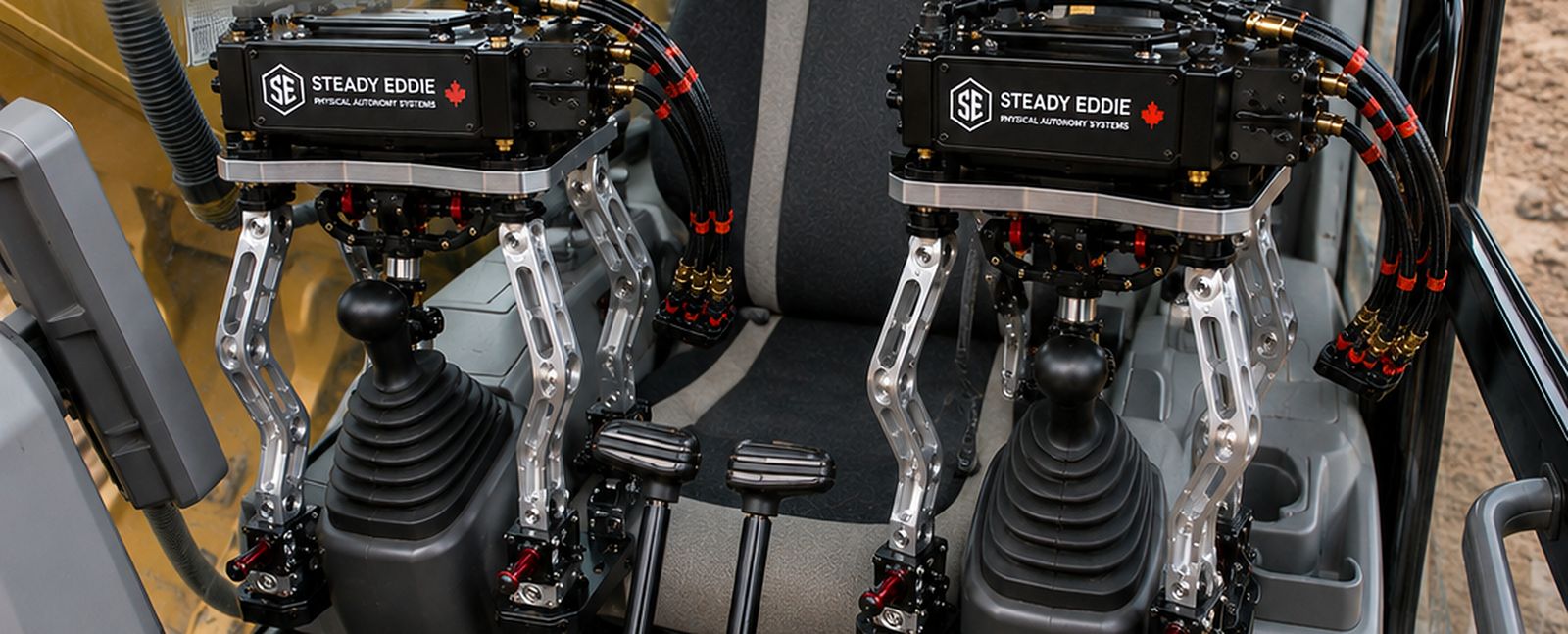
Three independent ways to take control away.
- Pull the machine's own pilot control lockout lever.
Fitted by the manufacturer, part of the machine. Eddie works it exactly as an operator does.
- Pull the red manual release on any actuator.
One hand, no tool, no air, no power. Each release separates that actuator from the control it drives.
- Vent the air.
Every drive lets go at once.
Each of the three works without the other two. A person can walk to the machine and pull the lockout lever. A technician can reach any actuator and pull its release by hand. Anyone can vent the air. No single failure takes out more than one of the three. Eddie's own safety controller and emergency-stop network sit alongside them on Eddie's side of the line, and never touch the machine's.
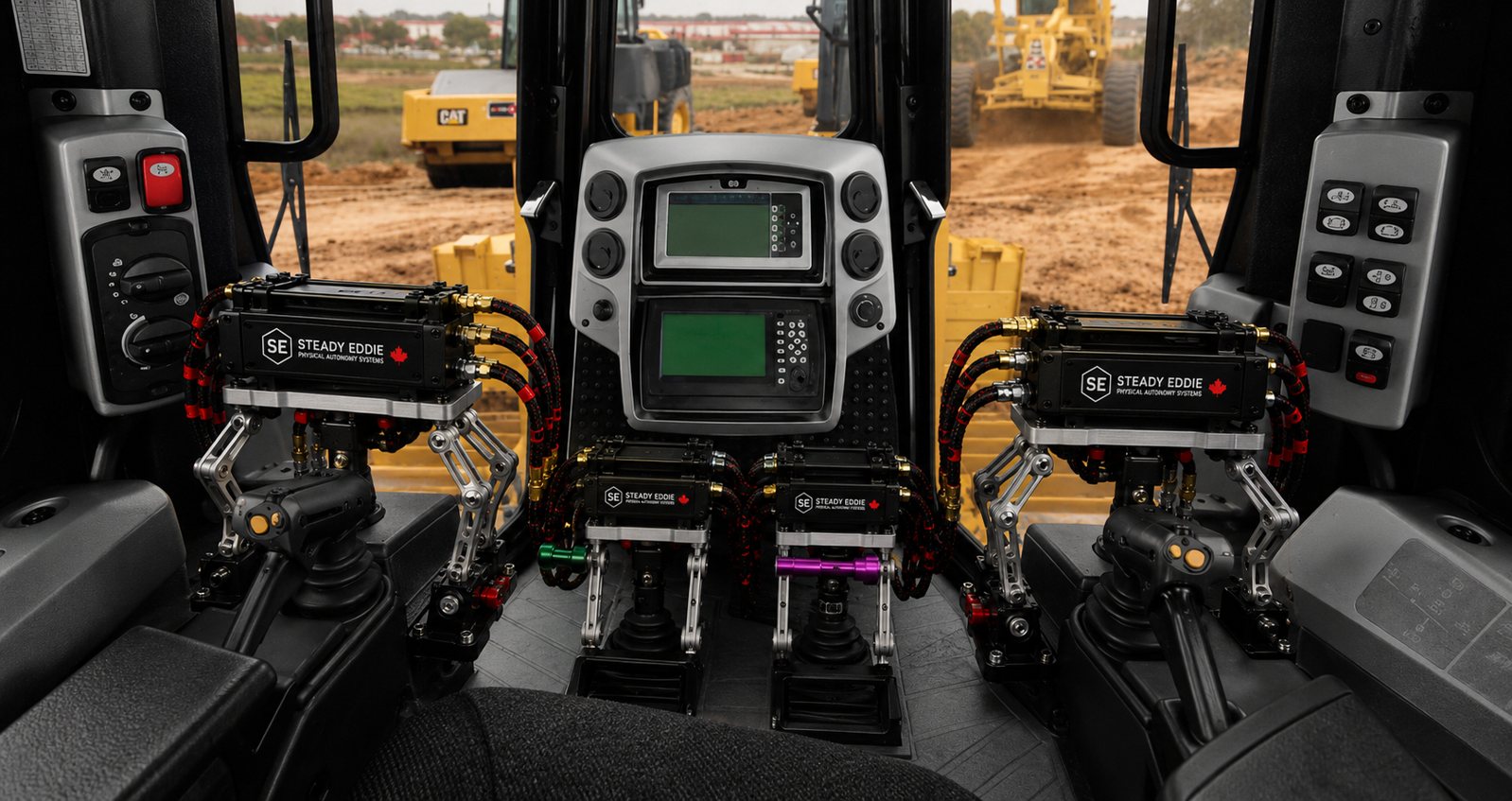
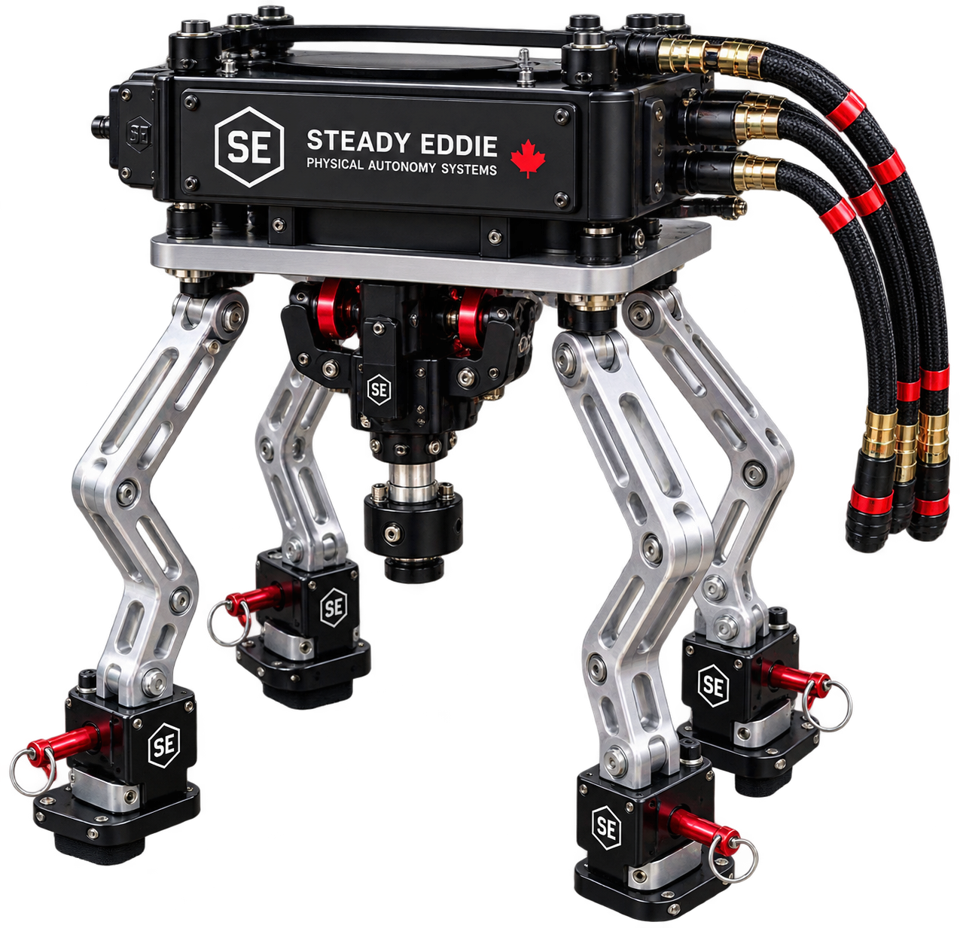
Every actuator has a red release you can pull by hand.
It works when nothing else does: no tool, no air, no power anywhere in the system. We demonstrate it on the machine, actuator by actuator, with your people watching and counting. It is the first thing a safety officer can check for themselves, and we would rather show it than describe it.
The standards we design against.
- ISO 13849. The safety functions are designed against that standard's architecture, with three independent means of removing control.
- ISO 17757. The standard for autonomous earth-moving machinery, and the one this safety design is built toward.
- Where we stand. We claim no certification and no performance level for this system. What we do put in front of you is the machine itself: come to our own Test Facility in Alberta, pull each of the three releases with your own hand, and watch Eddie let go.
Warranty, conformity and liability.
Steady Eddie operates a machine through its own controls. Nothing is cut, no harness is tapped, no controller is flashed and no OEM software is touched, so the integration and intellectual-property work that an electronic conversion requires does not arise, and the machine's own safety systems are left in place and operating. That is an engineering property and we can show it to you on the machine. It is not a legal opinion. Whether any particular installation affects a warranty, a conformity assessment or a liability position depends on the machine, the jurisdiction and the contract, and it is a question for your counsel. We will not give you a legal opinion, and you should not accept one from any vendor.
Three short answers for the three people who can say no.
One fewer person in a hazardous seat. Three independent ways to remove control. A red release on every actuator. A person starting the machine every session. Count the releases yourself.
Nothing new to diagnose. Nothing cut, tapped or flashed. The dock is mechanical, the unit lifts out, and no diagnostic path for your machine runs through us.
The statement above, in full. We make no warranty, conformity or liability representation. What an installation means for your machine, in your jurisdiction, under your contract, is a question for your counsel.