
The seat is the bottleneck. Not the machine.
Nobody puts a robot in a seat that a good operator is already sitting in. The case for Steady Eddie is made by three other seats: the one you cannot fill, the one nobody should sit in, and the machine standing still while you look. This page adds them up, first with published figures and the day we read them, then with your own numbers.
One operator seat, added up the way it is paid.
An Alberta heavy equipment operator, employed by the hour, ten hours a day, five days a week, two hundred and twenty days a year. Two columns: the published median wage, and the published high, which is closer to what a seat that runs a machine well is paid around here.
| The line | At the published median, $34.30 an hour | At the published high, $45.00 an hour |
|---|---|---|
| Wages, with overtime at time and a half over eight hours a day | $83,006 | $108,900 |
| Vacation pay | $3,320 | $4,356 |
| General holidays, nine a year | $2,470 | $3,240 |
| Canada Pension Plan, the employer's share | $4,646 | $4,646 |
| Employment Insurance, the employer's share | $1,572 | $1,572 |
| Workers' compensation, mobile equipment operation | $1,696 | $2,118 |
| Benefits: health, dental, a pension match | your figure | your figure |
| Camp, living-out allowance, the truck | your figure | your figure |
| Recruiting and turnover | $6,000 | $6,000 |
| Training and tickets | $3,000 | $3,000 |
| The seat, before benefits and allowances | $105,711 a year | $133,833 a year |
| Per working day | $481 | $608 |
| Per operated hour | $48.05 | $60.83 |
Add a living-out allowance of $150 a day for a camp seat and the high column becomes $166,833 a year, $758 a working day. Two things are left out of both columns on purpose. Fuel and wear, because the machine burns the same fuel whoever is in the seat. And the machine itself, which is the next section.
Wages: Job Bank, heavy equipment operator, Alberta, reference period 2023 to 2024, page updated 2025-11-19. Overtime, vacation pay and general holidays: Alberta Employment Standards. Pension and Employment Insurance: Canada Revenue Agency, 2026 rates and maximums. Workers' compensation: WCB Alberta 2026 premium rate for mobile equipment operation. Recruiting and training: planning figures from our own operating companies. Everything read on 2026-09-08; the full list, with links, is at the foot of this page.
A machine costs money standing still.
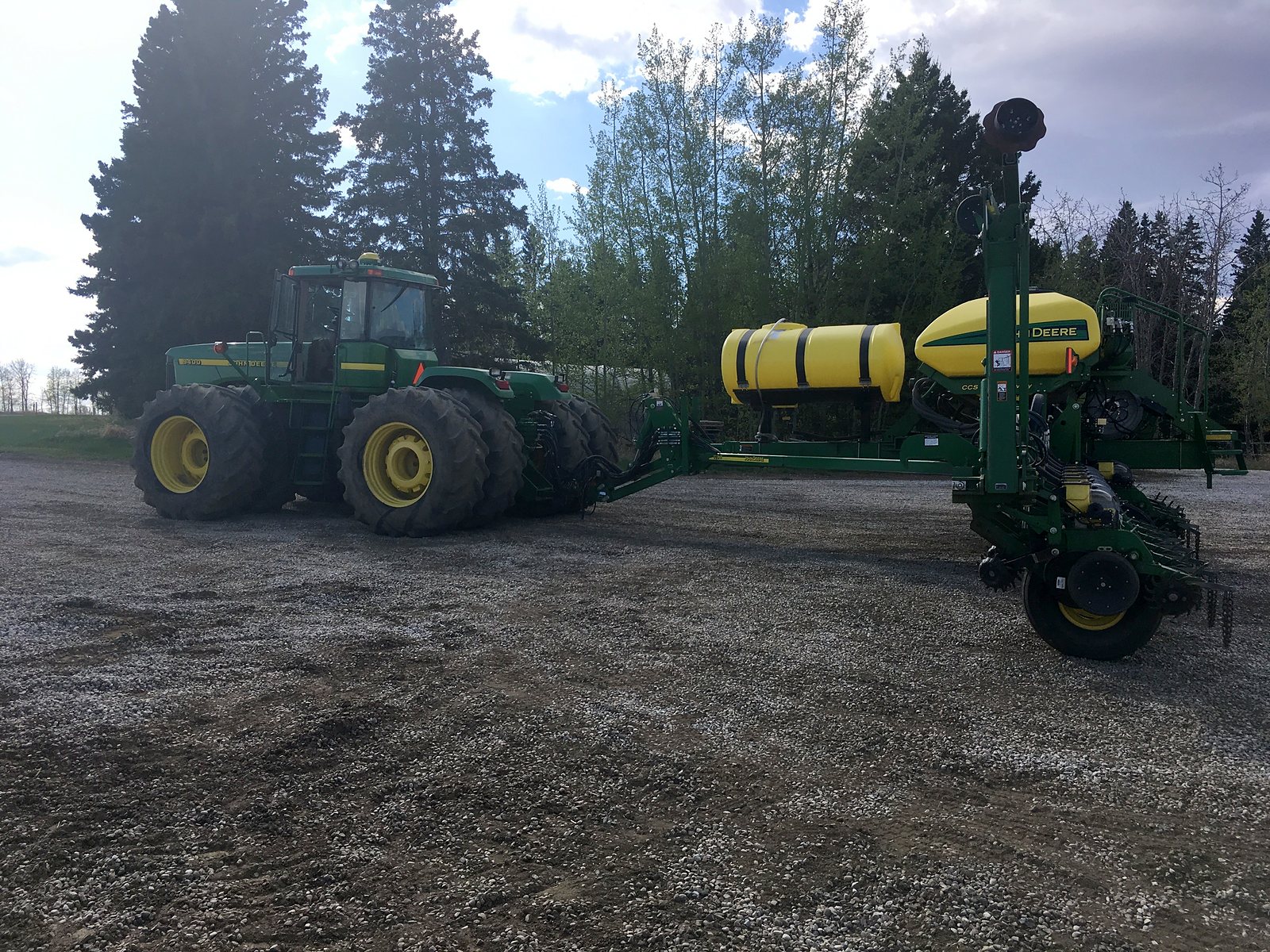
Depreciation, interest, insurance and the shed are paid whether the machine runs or not. When the seat is empty, that part of the hour is still yours. Saskatchewan Agriculture publishes the figure for farm iron: in this year's custom and rental rate guide, a four-wheel-drive tractor in the largest class carries an ownership cost of $137.27 an hour at four hundred and fifty hours a year. A hundred hours that tractor waited for a driver is $13,727 that bought nothing.
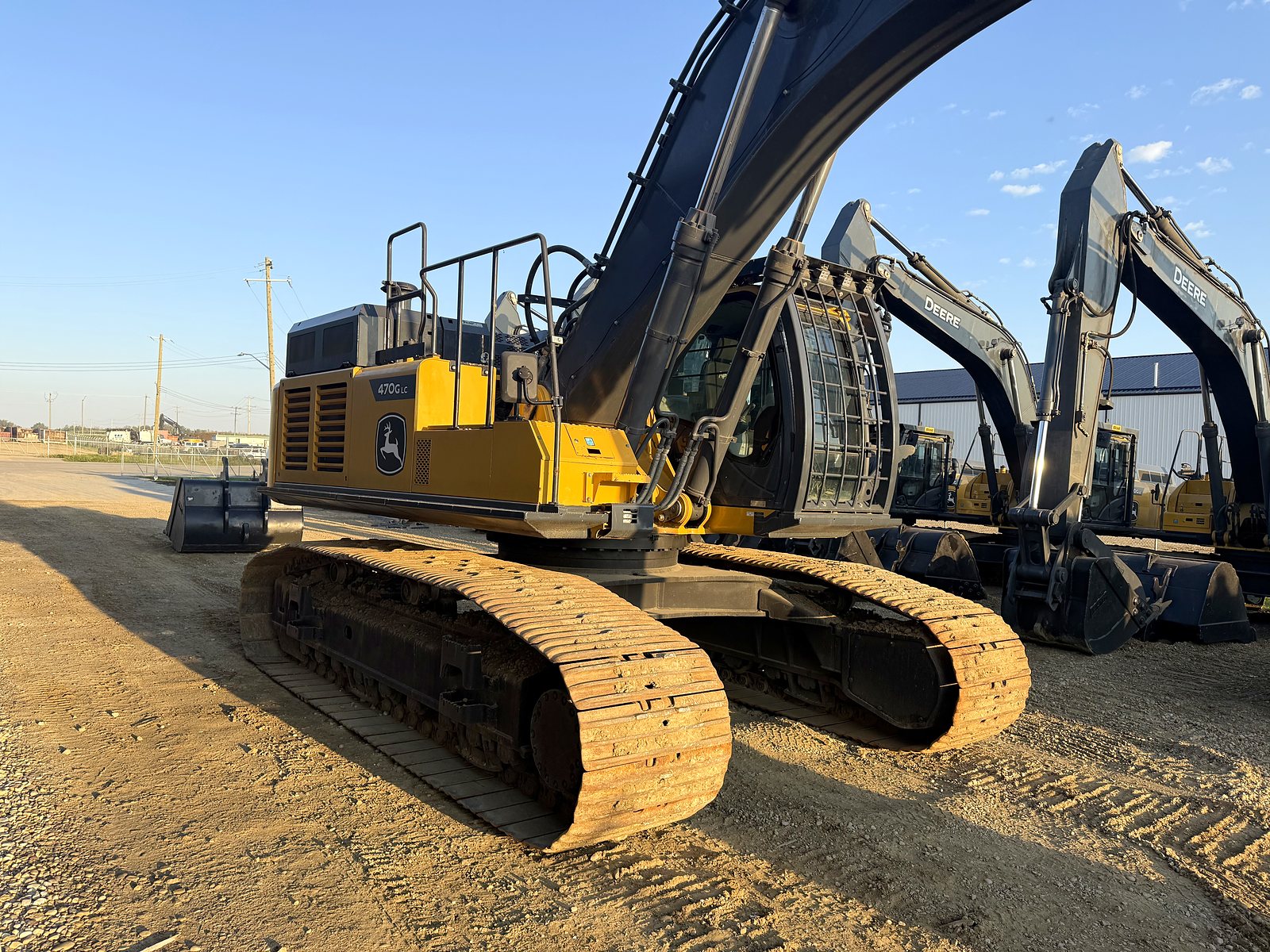
No published guide splits that figure out for an excavator or a dozer. For construction iron the number comes from your own books, and the calculator below takes it.
Ownership cost is what an hour of the machine costs you before it moves. It is the part of the rate you keep paying while the seat is empty.
The hours nobody could sit in.
One in twenty heavy equipment operator positions in Alberta was vacant when the province last surveyed the trade. Alberta's own wage survey found five per cent of heavy equipment operator positions vacant, and thirteen per cent of employers with a vacancy had held it open for more than four months. BuildForce Canada expects 43,700 of the province's construction workers, twenty-one per cent of the 2025 labour force, to retire by 2035, and a shortfall of as many as 5,300 workers by the end of the decade.
The arithmetic of an unfilled seat is short. A night shift of ten hours, five nights a week, for a twenty-week season, is a thousand hours. Multiply by what an operated hour is worth to you, the rate you would have billed or the work you deferred, and you have the cost of the seat you could not fill. It is usually the largest number on this page, and it is the one only you can put in.
The seasonal seat is the one a hiring cycle cannot fill. On a farm the window closes on its own: the Canola Council of Canada's guidance is that early-seeded canola tends to produce higher yield and quality, and that the greatest yield penalties from planting late have typically come from seeding in the last week of May or early June. A seat empty in that window costs bushels, not wages.
Some seats are worth emptying at any price.
Under a highwall, pushing tailings, on contaminated ground, on a night shift under light towers. The first reason owners call us has no dollar figure on this page, because the value of taking a person out of that seat does not depend on how fast the machine works, and we would rather say so than invent one. Emptying the seat does not settle the ground: the highwall, the tailings and the site's own controls are managed exactly as they are today. The safety page says what stops the machine; the first responders and defence pages say which seats we mean.
What Steady Eddie changes, and what it does not.
- The seat you could not fill becomes a seat you can. A unit on the seat works the machine's own controls, and it is designed to be run by a person at a screen. Those hours are the ones this page asks you to price.
- The camp, the travel and the truck go, for that seat. The person who runs the machine no longer has to be where the machine is, so the living-out allowance and the drive stop with it. So does the premium for putting a person on the ground at night. The lighting, the traffic control and the site rules for night work stay exactly as they are.
- The machine you own keeps working. A machine with service life left and no operator is a machine you would otherwise replace at new-machine prices.
- The wage does not go, in the first form. Today a person still runs each machine, one operator to one seat, made removable and relocatable. Supervised operation, one person over several seats, is what the design is built toward, and we will put a number on it when we have measured one. What does not change with the number of seats is the person: somebody walks around the machine, completes the pre-start inspection, starts it and clears it for operation, every session, and a named person accepts the day's limits before the machine works.
- The pace stays the person's. The pace of the work is the pace the person running the machine sets, and no line on this page turns on it.
When the system is cleared for release we come to each name on the list in order, with the fit for your machine, the terms and a date. The terms are not printed here, because what fits your machine decides them. Hold your place and it comes to you. Whether any particular installation affects a warranty, a conformity assessment or a liability position depends on the machine, the jurisdiction and the contract, and it is a question for your counsel.
The unit that sits in the seat is built, powered and cycling on the group's own machines at our Test Facility in Alberta; every axis is running its controls through their travel, and the computer that plans the work goes in next. No assessment against ISO 13849 or ISO 17757, the standards we design against, has been performed.
Cost your seat.
Every wage and statutory field starts on a published figure or a planning figure from our own operating companies; the rest start on a round number or on zero, because they are yours. Change any of them. The page adds as you type and keeps nothing.
| What the seat problem costs you | Per year | Per working day | Per operated hour |
|---|---|---|---|
| The seat, all in | … | … | … |
| The machine standing still | … | … | … |
| The hours nobody could sit in | … | … | … |
| Last year's seat problem, all in | … | … | … |
Overtime at time and a half over eight hours a day or forty-four hours a week, whichever is greater. Vacation pay at four per cent. Nine general holidays. Pension, Employment Insurance and workers' compensation at the 2026 rates and maximums. A contractor's rate is taken as all in, with no overtime premium and no burden added.
Where the figures come from, and the day we read the published ones.
- Job Bank, heavy equipment operator, Alberta wages: low $26.00, median $34.30, high $45.00 an hour, reference period 2023 to 2024, page updated 2025-11-19. Read 2026-09-08.
- Job Bank, farm machinery operator, Alberta wages: low $15.00, median $25.00, high $32.00 an hour, page updated 2026-08-07. Read 2026-09-08.
- Alberta Wage and Salary Survey 2023, heavy equipment operators: average $34.81 an hour, 42.9 hours a week, 10.1 months on payroll, a five per cent vacancy rate, thirteen per cent of employers with a vacancy open more than four months. Read 2026-09-08.
- Alberta Employment Standards, overtime, vacation pay and general holidays. Read 2026-09-08.
- Canada Revenue Agency, CPP contribution rates 2026: 5.95 per cent to $74,600 with a $3,500 exemption, and the second contribution of four per cent to $85,000. EI premium rates 2026: 1.63 per cent to $68,900, the employer at 1.4 times. Read 2026-09-08.
- WCB Alberta, 2026 premium rates by sector and rate group: mobile equipment operation $1.91 per hundred dollars, crop farming $2.25, beef producers $3.73; maximum assessable earnings $110,900, read 2026-09-04. Read 2026-09-08.
- Saskatchewan Agriculture, Farm Machinery Custom and Rental Rate Guide 2026 to 2027: four-wheel-drive tractor, largest class, ownership cost $137.27 an hour at four hundred and fifty hours a year. Read 2026-09-08.
- BuildForce Canada, Alberta forecast, 2026-07-20: 43,700 retirements by 2035, twenty-one per cent of the 2025 labour force; a possible shortfall of 5,300 workers by the end of the decade. Read 2026-09-08.
- Canola Council of Canada, time of seeding. Read 2026-09-08.
- Planning figures from our own operating companies: recruiting and turnover $6,000 a year; training and tickets $3,000 a year.
Nothing on this page is tax, legal or financial advice. Your accountant's figures beat ours, and the calculator is built to take them.