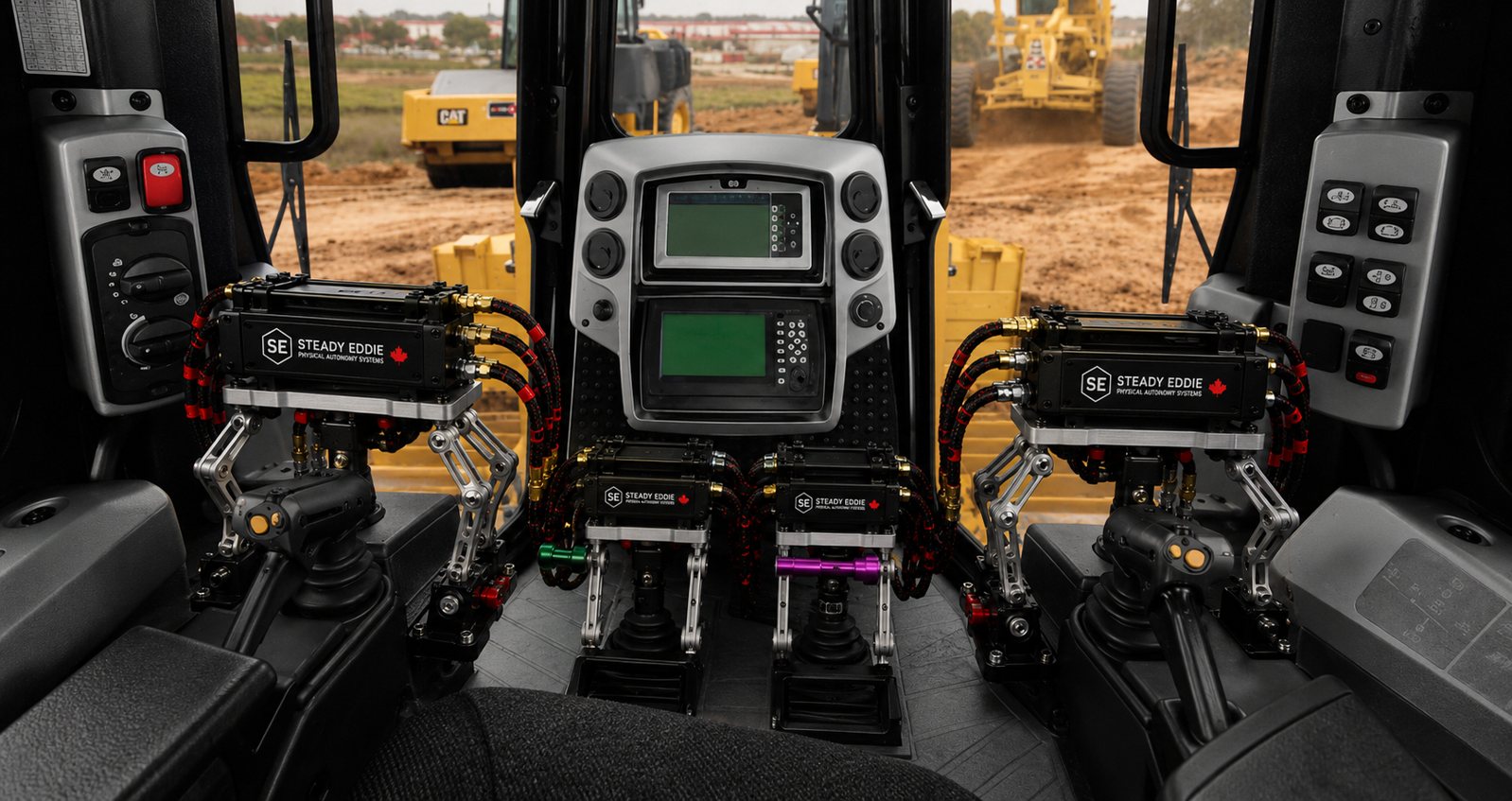
The operator is hardware, and the machine stays stock.
Eddie is a removable machine operator. It sits where your operator sits, works the same controls, and lifts back out when the job is done. Eddie is a helping hand: it works the tools. It does not drive the machine on a road, it does not start it, and it does not decide.
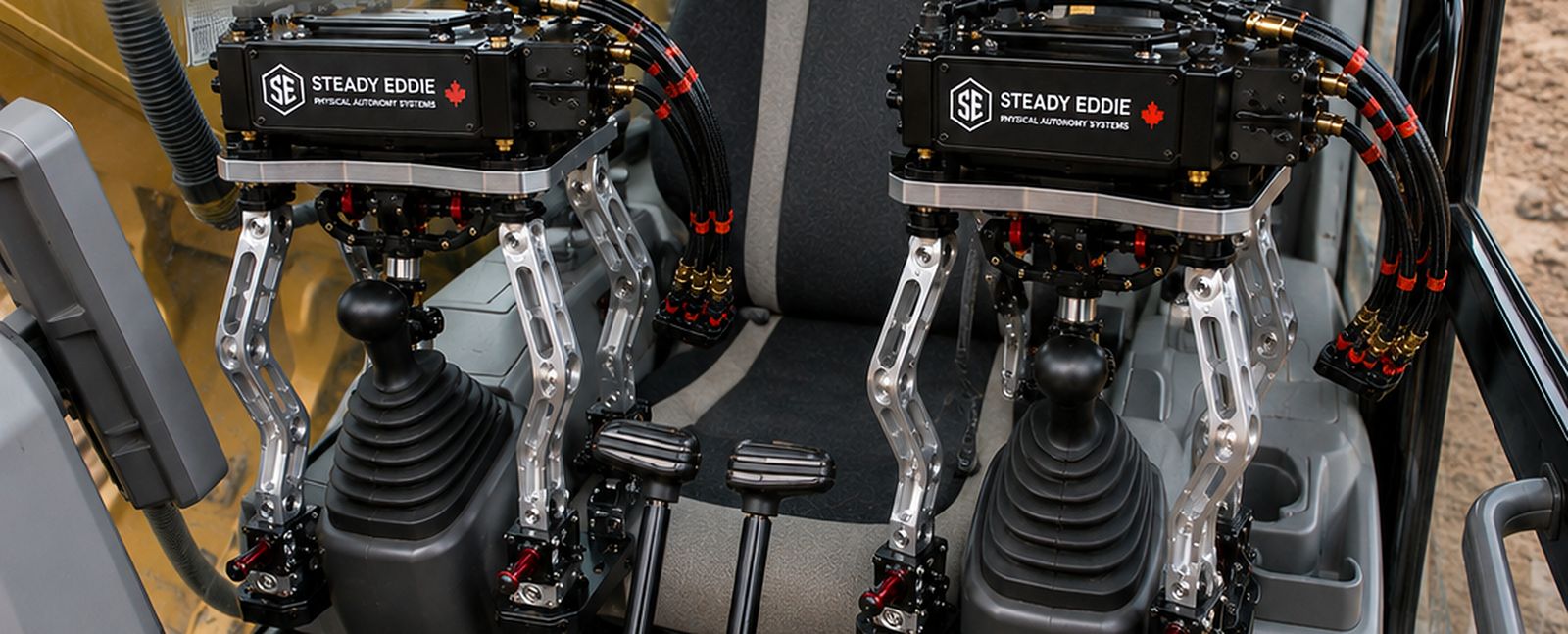
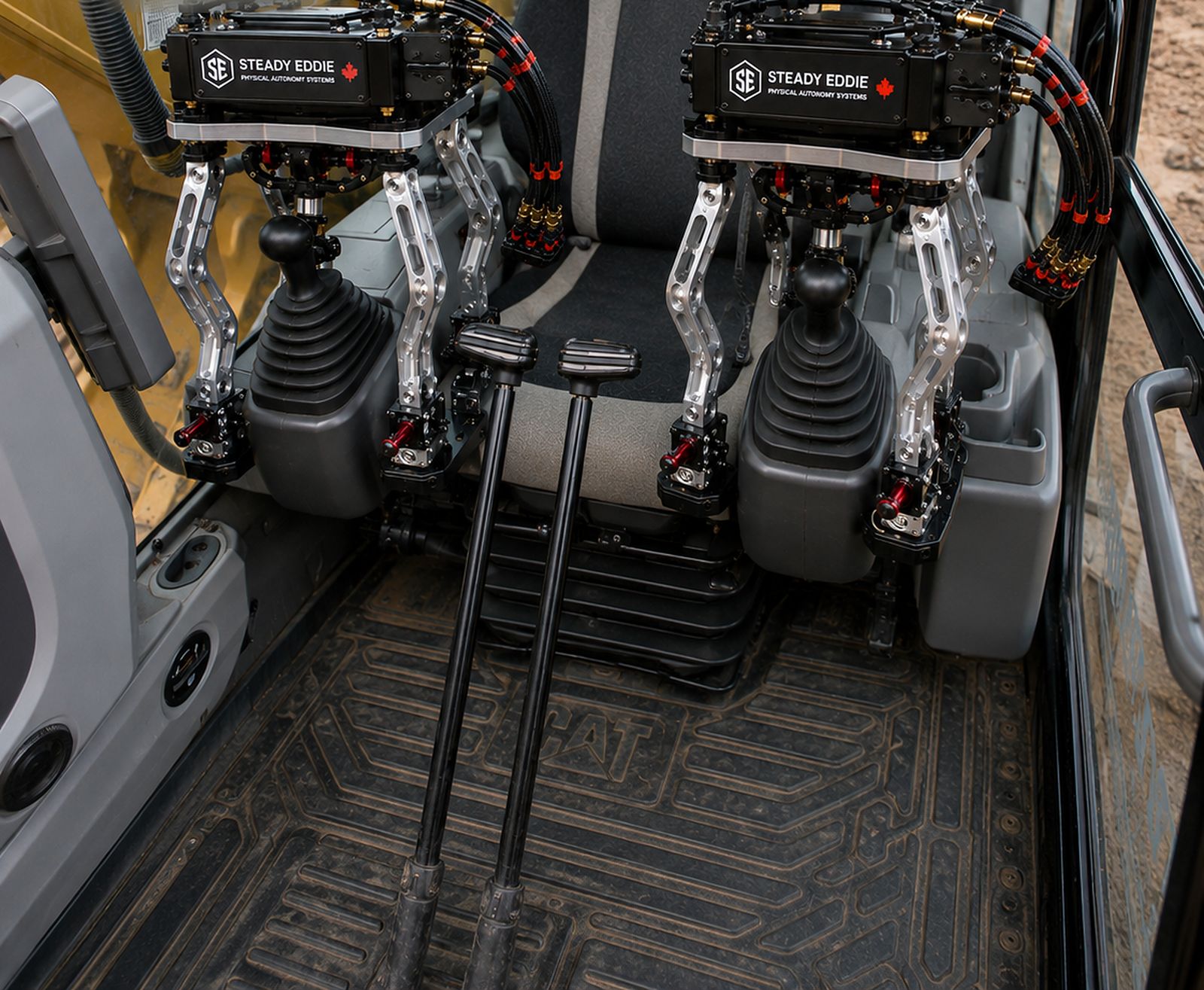
Excavator cab, Steady Eddie on the joysticks.
Two pieces: a dock and a unit.
The dock is fitted once and stays with the machine. It mounts at the operator station, mechanically, into points the manufacturer already provided: no wiring, no connector, no tap. With the unit out, the dock is just part of the cab and the machine works as it always has.
The unit sets into the dock and lifts back out. It carries the computing, the safety controller, the sensing and the drives that move the controls. You buy a dock for each machine and one unit that goes where the work is.
Control the machine where the operator does.
Docked, Eddie runs the machine through the same joysticks, levers, pedals, dials and switches your operators use, over the same travel a hand or a boot gives them. The machine gets the inputs it was built to get, and it behaves the way its manufacturer built it to behave.
Never onto the machine's CAN bus. Never into its ECU. Never its firmware. Eddie's own actuators and safety controller run on a private, isolated network of their own, and that network never touches the machine's.
Your machine does not need electronics for this to work. A new excavator and a machine older than the crew running it are handled the same way. Electric where it turns. Pneumatic where it pushes.
You fit it, and Eddie calibrates to it every day.
Fit.
You fit it, following our instructions. The dock goes in at the operator station and the control units pin onto the machine's own controls. Every part of it is built to come off again and move to the next machine.
Tell it the machine.
You select the machine type in the software. Eddie never puts more force on a control than that kind of machine should see.
Calibrate.
Eddie works each control through a set of calibration steps and learns where neutral sits, where the limits are, how much travel there is before the machine answers, and how the control comes back when it is released.
Every day.
Worn, sloppy controls are the normal condition on an older machine, and no two are alike. So Eddie calibrates on the machine every day it works, not once at commissioning. Calibrating daily is what makes an old machine workable.
Eddie brings its own eyes.
- Eddie senses with its own cameras and proximity sensing, all carried on the unit. It never uses the machine's sensors or its bus.
- It reads the gauges and warning lights by looking at them, so nothing taps into your machine's electronics.
- Its own safety controller and emergency-stop network sit on Eddie's side of the line. Your machine's safeguards stay in place and keep working.
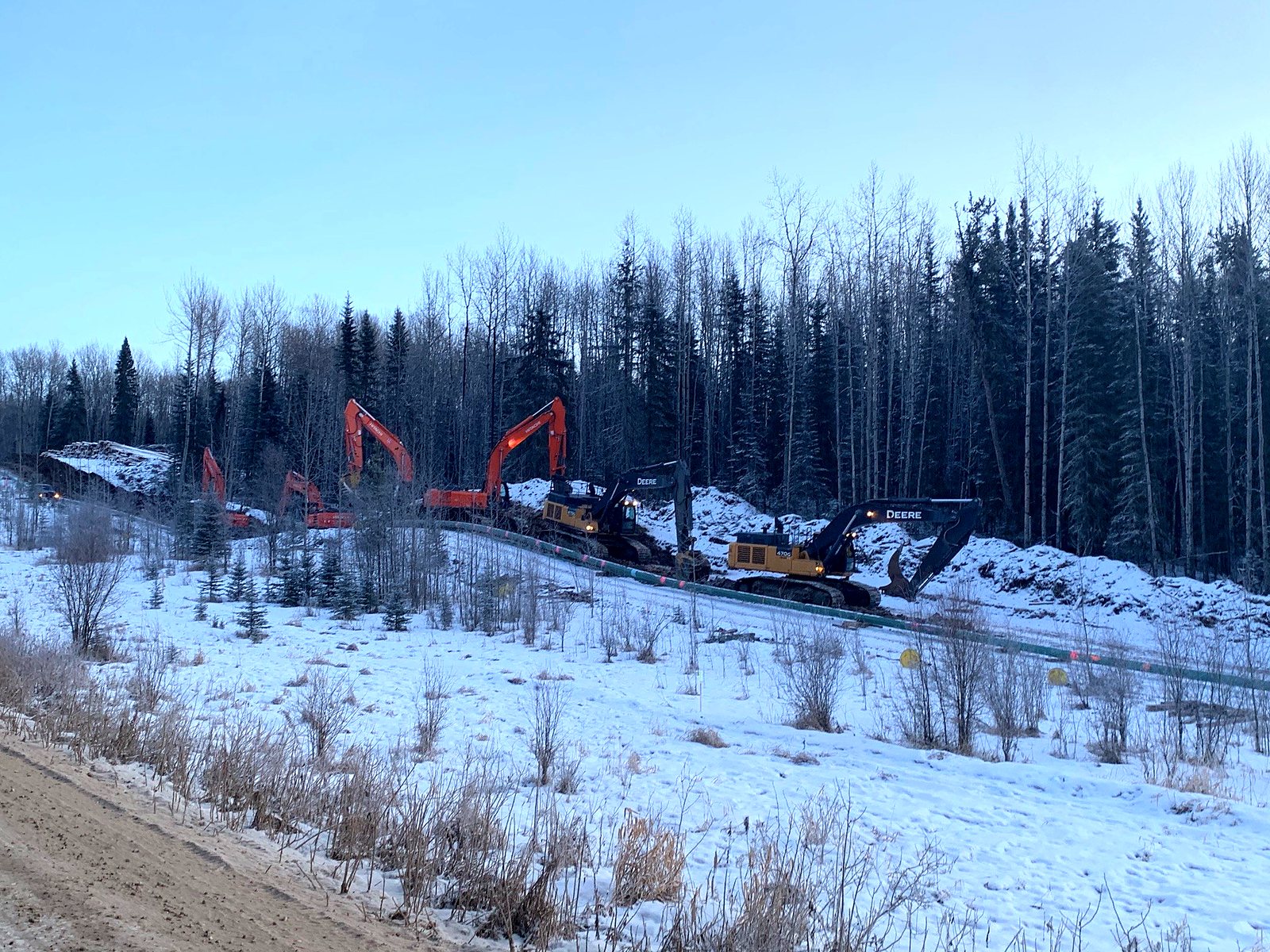
Built for the ground we work.
The excavators on a winter right-of-way, Western Canada.
Who is in charge, in order.
- A person starts the machine.
A human walks around the machine, completes the pre-start inspection, starts it and clears it for operation. Only then does Eddie engage the controls: every session, every machine, no exceptions. Eddie never starts, wakes or inspects a machine.
- Rules decide what is allowed.
The planner proposes a move and the rules decide whether it is allowed. Responses are fixed, not improvised.
- The person at the machine is in charge.
Anyone standing at the machine can take Eddie's control away, at any time, with one hand.
- Safety wins, three ways.
Pull the machine's own pilot lockout lever. Pull the red manual release on any actuator, one hand, no tool, no air, no power. Or vent the air, which releases every drive at once.
Steady Eddie operates a machine through its own controls. Nothing is cut, no harness is tapped, no controller is flashed and no OEM software is touched, so the integration and intellectual-property work that an electronic conversion requires does not arise, and the machine's own safety systems are left in place and operating. That is an engineering property and we can show it to you on the machine. It is not a legal opinion. Whether any particular installation affects a warranty, a conformity assessment or a liability position depends on the machine, the jurisdiction and the contract, and it is a question for your counsel. We will not give you a legal opinion, and you should not accept one from any vendor.
In the cab.