 STEADY EDDIEPhysical Autonomy Systems
Physical Autonomy Systems · A Standalone Division of SIG · Engineered in Western Canada
STEADY EDDIEPhysical Autonomy Systems
Physical Autonomy Systems · A Standalone Division of SIG · Engineered in Western Canada
STEADY EDDIEPhysical Autonomy Systems
Physical Autonomy Systems · A Standalone Division of SIG · Engineered in Western Canada
STEADY EDDIEPhysical Autonomy Systems
Physical Autonomy Systems · A Standalone Division of SIG · Engineered in Western Canada
Steady Eddie's technology is not one AI in charge of a machine. It is a stack of independent layers — perception, planning, deterministic control, standardized actuation, and a separate safety controller — in which each layer can only act within the permission granted by the layer above it. The AI proposes. Everything above it disposes.
Control the machine where the operator does.
Eddie actuates the machine's stock human controls only — zero CAN / ECU / PLC / firmware tie-in, ever. Not "minimal integration." Not "read-only access." None. The machine's electronics, software and native safeguards remain exactly as the OEM built them, and the machine returns to ordinary human operation the day Eddie is removed.
Physical actuation reduces integration and IP risk. It is never marketed as a blanket legal shield — warranty, liability, functional safety and certification are assessed per machine and per jurisdiction, with counsel.
The OEM's native safeguards stay in place and stay primary. On the Caterpillar 320, the machine's own hydraulic lockout lever remains the primary safety mechanism — Eddie's actuator drives the same lever a human would use.
Removable by design. Install the dock once. Deploy Eddie when required. Remove Eddie when not — and the machine is simply a machine again, with nothing rewired and nothing reflashed.
Every Steady Eddie product — forty-four of them, SE-X001 through SE-X044, spanning ten machine families from a 1928 Ford Model A to a Caterpillar 320 excavator — is engineered around the same stack. All forty-four are GOLD STANDARD engineering-complete, and every one has physical hardware running on the bench today, not yet installed on a customer machine in the field. The host machine sits at the bottom, untouched electronically. Everything Eddie adds sits above it. And every session, on every package, begins the same mandatory way: a human starts the machine, completes their own pre-start inspection and clears it for operation — only then does Eddie engage the controls.
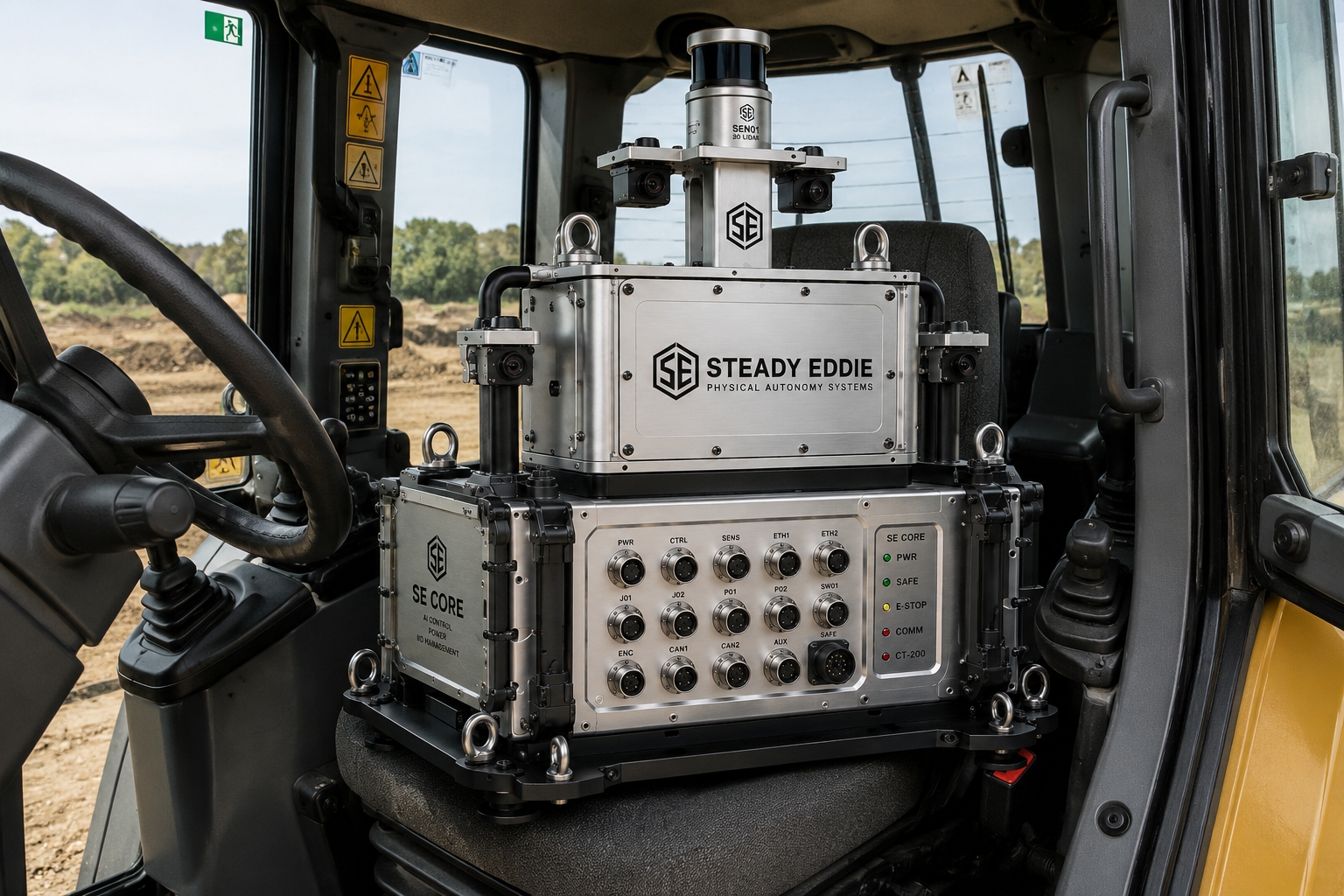
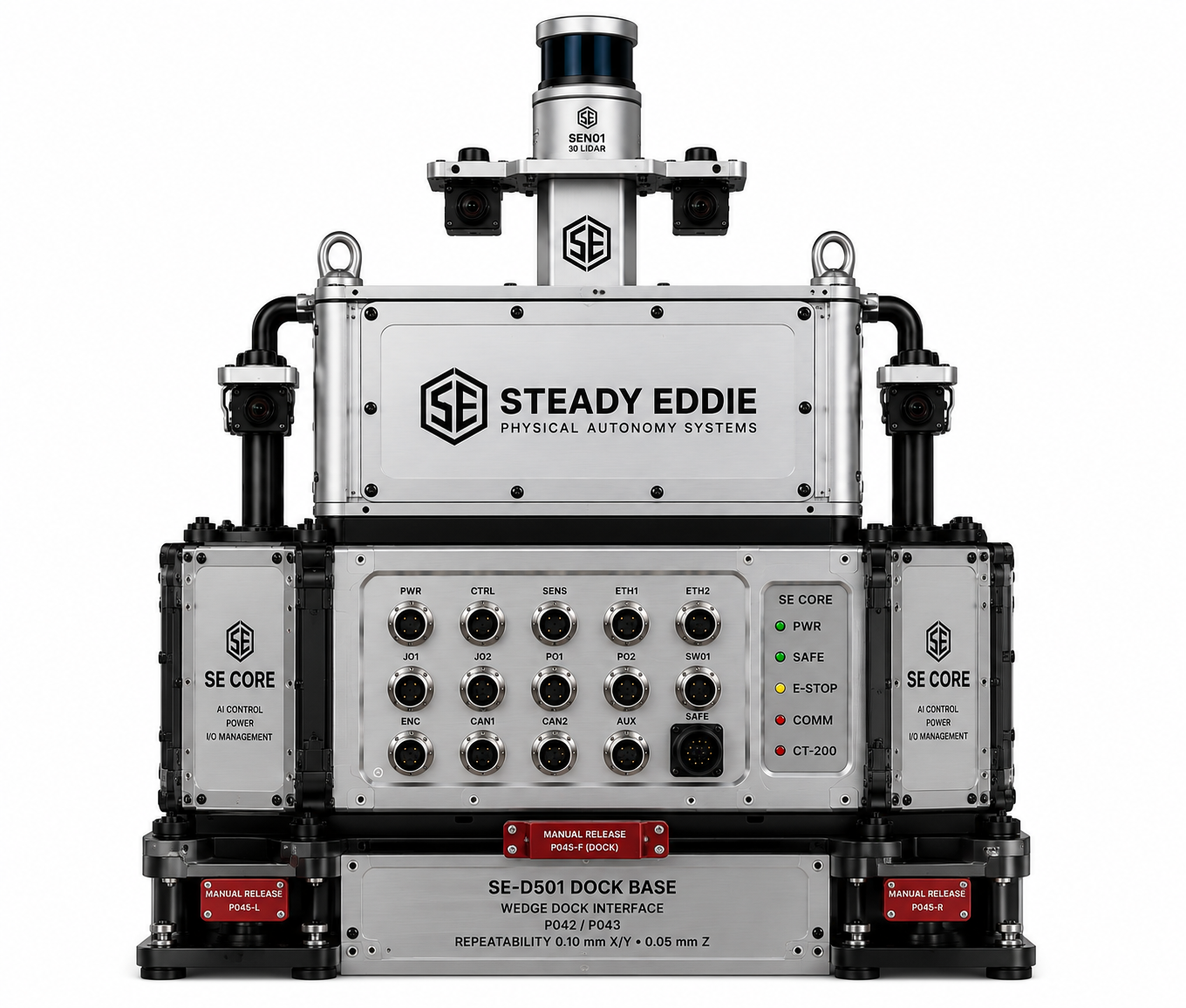
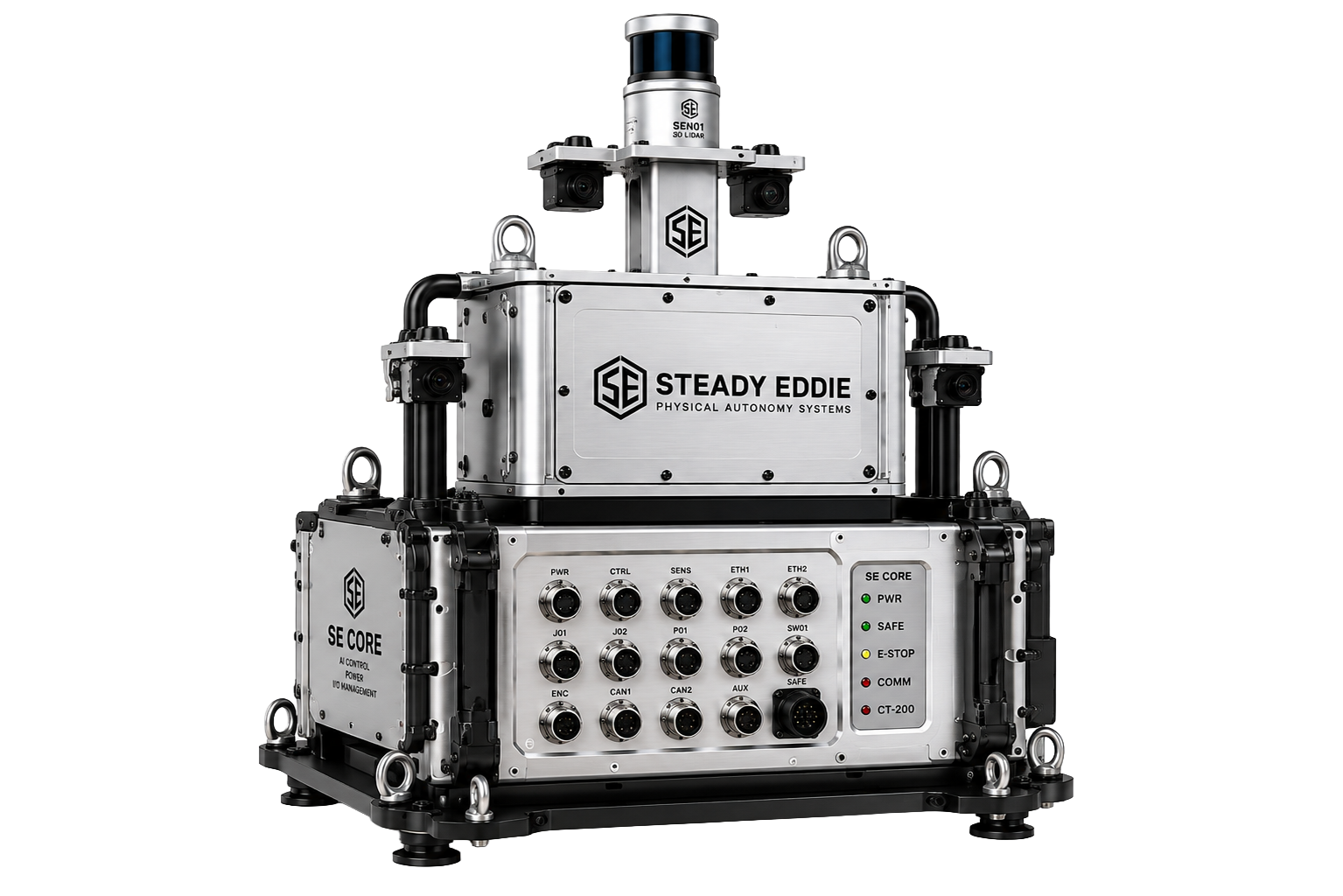
SE CORE is the compute and control enclosure at the centre of the stack — S-02 above — combining AI planning, power distribution and I/O management in one sealed unit, topped by the SEN01 3D LiDAR and stereo camera mast that gives Eddie its own independent view of the machine and the site.
The connector panel is hard-wired, not bussed: dedicated channels for joysticks (J01/J02), pedals (P01/P02), the switch bank (SW01), encoder, CAN and the safety net run point-to-point per S-04 WIRED I/O — nothing here shares a bus with the host machine's own electronics.
The seat-docked view shows the SE-D901 dock base — bolts to the seat rails, wedge dock interface, four SE-D507 quick-latch receivers at M12/85 Nm — the same clamp-and-latch, no-drilling install pattern used across every Steady Eddie package.
The layers are separable on purpose. Perception does not trust the planner. The safety controller does not trust either. No single computer holds all the authority.
Eddie sees the world — and the machine — through its own sensors, not the machine's electronics. SE EYES watches the environment; the SE-DISPLAY dash reader reads the operator's gauges and warnings optically, exactly the way a human operator does. SE NAV establishes position.
SE CORE plans work inside RULESPACE — the digitized operating envelope. The AI may propose anything; the rules engine determines what is permissible, and all response logic is deterministic, never improvised. SE HARDLINK carries command and control on a wired path — wireless never carries safety or motion. SE BLACKBOX logs every command, response and intervention.
A family of actuator modules drives the machine's stock human controls: SE-J for joysticks, SE-P for pedals, SE-W steering rings, SE-L levers, SE-SW switches. SE FIT kits and SE Machine Profiles adapt the common modules to each machine — reversibly. Every actuator carries a RED MANUAL RELEASE.
SE SAFE is a separate safety controller with its own authority, backed by the SE-E e-stop net. Override paths are layered across modes 0–4 — mechanical disengage, local E-stop, touch override, remote E-stop, software stop — deliberately not all on one computer. Every machine gets a defined Minimum Risk Condition.
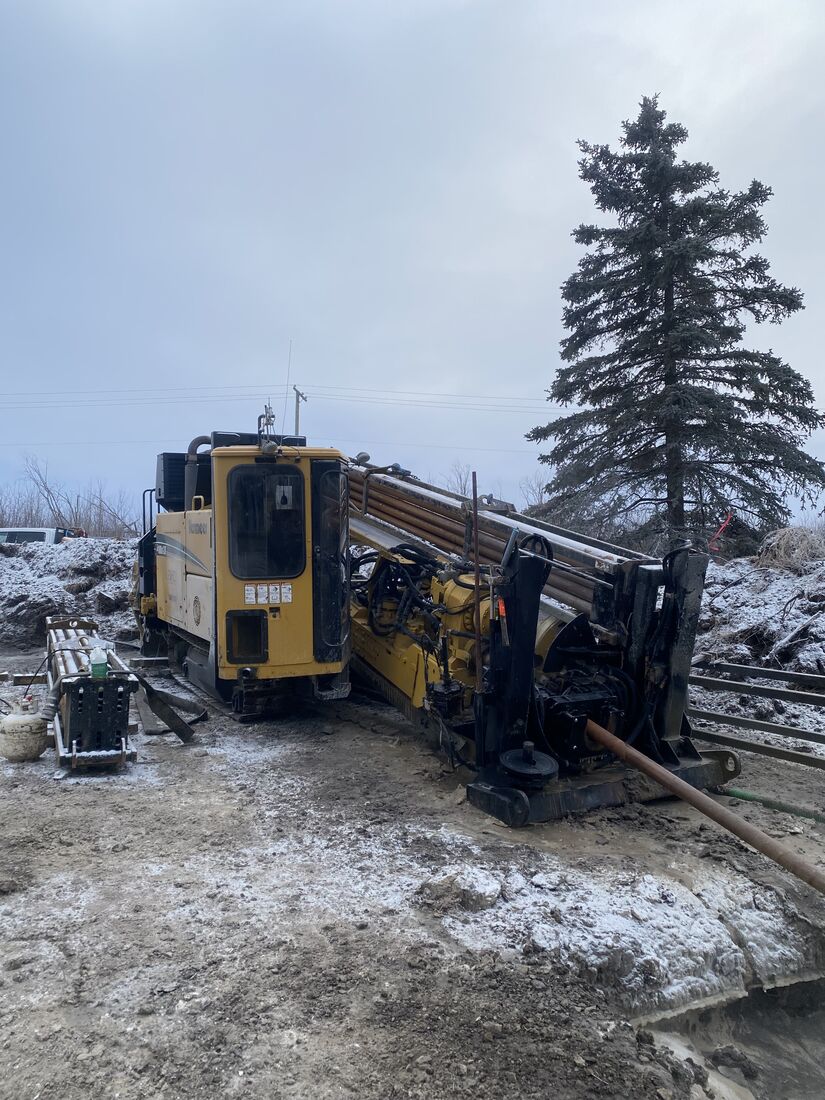
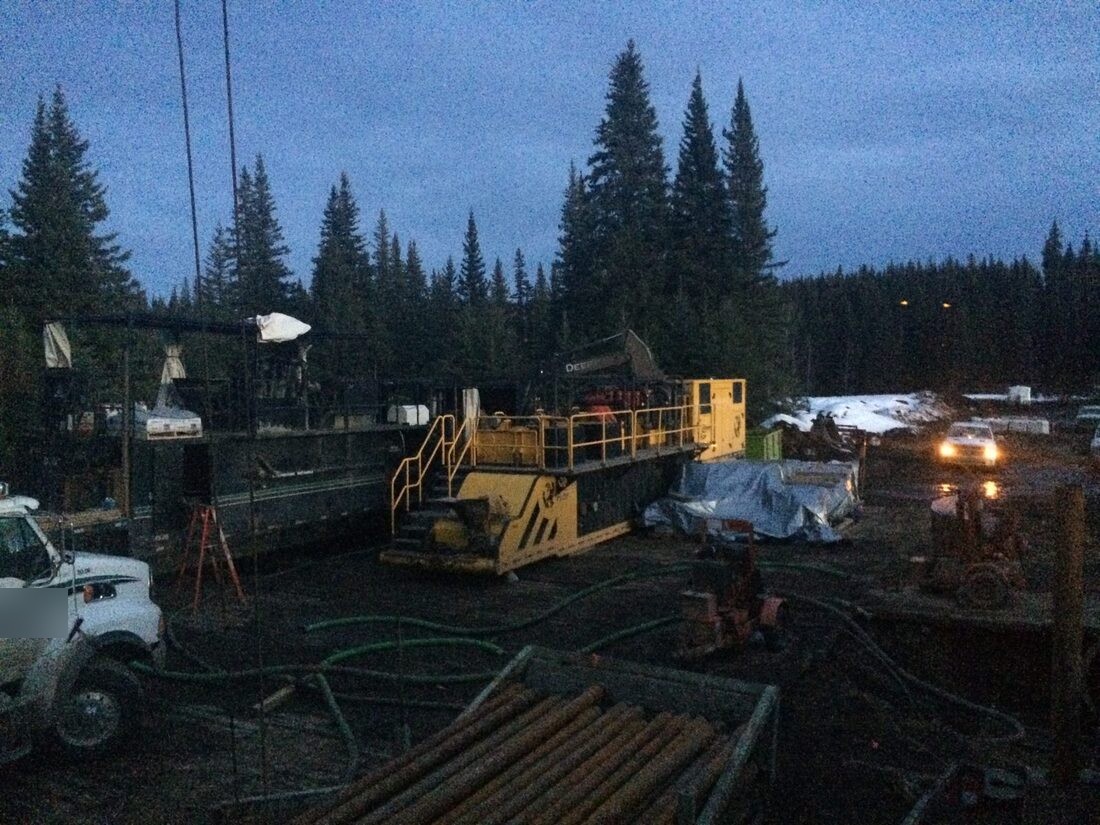
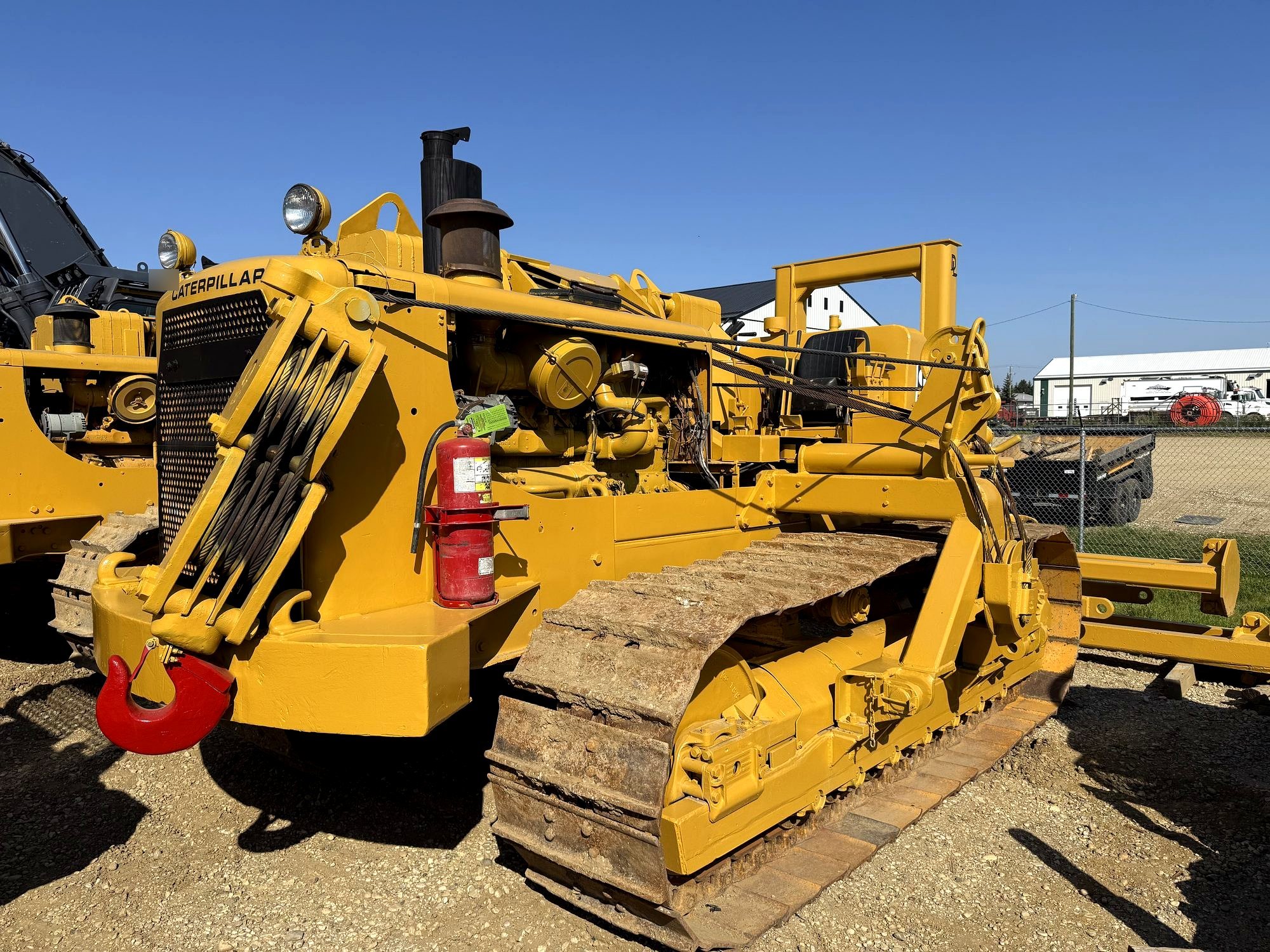
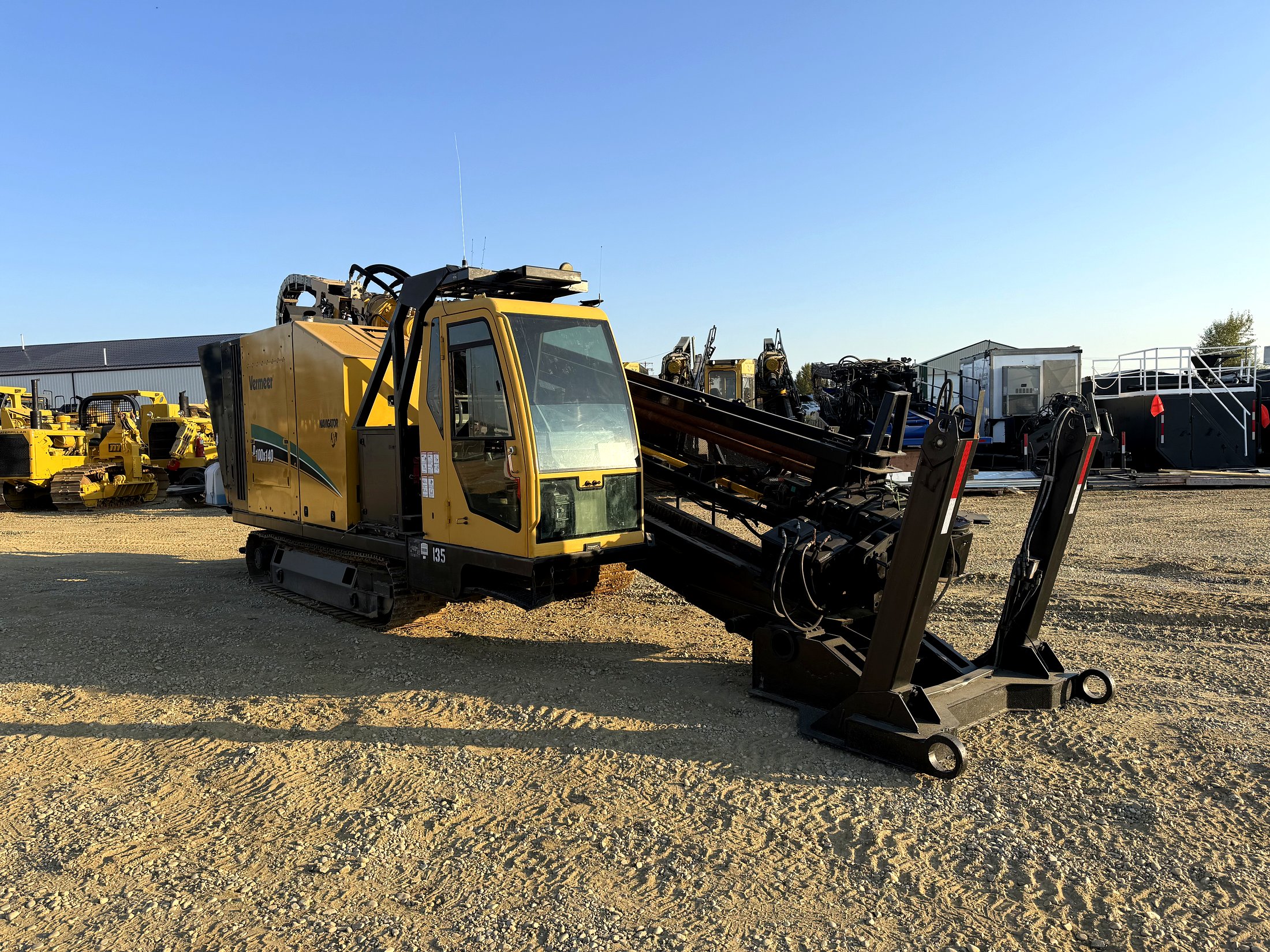
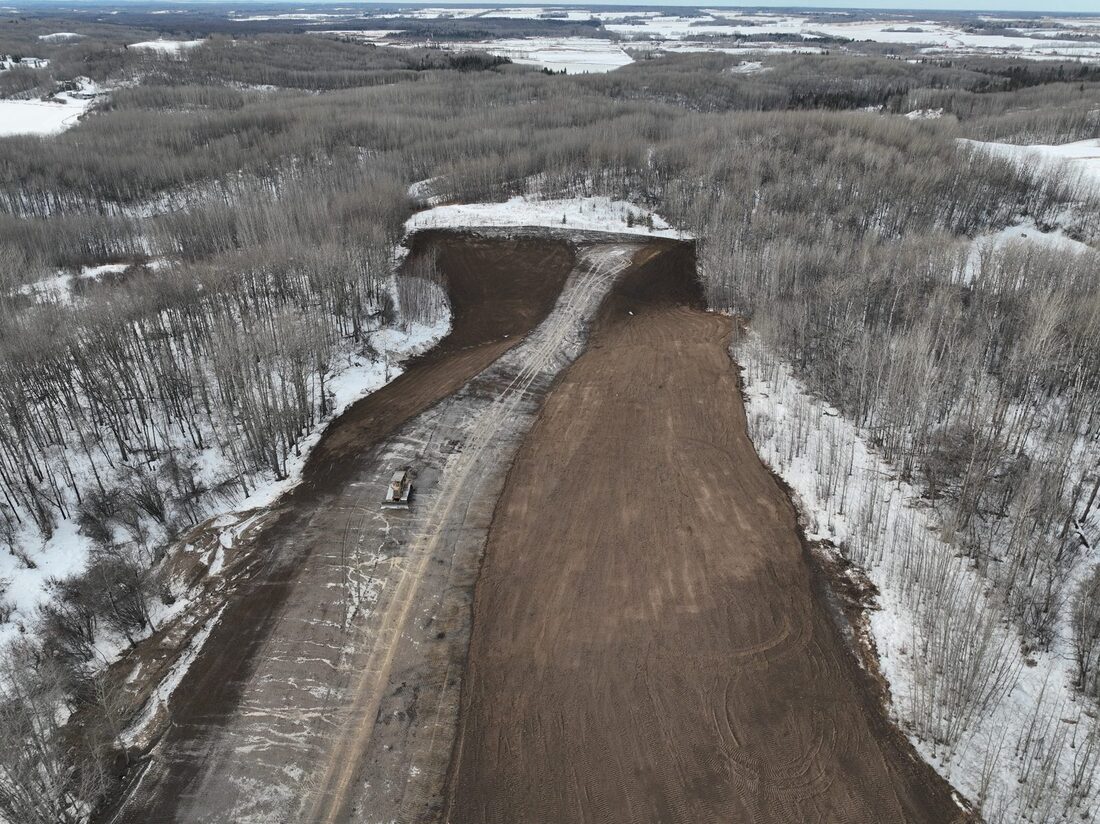
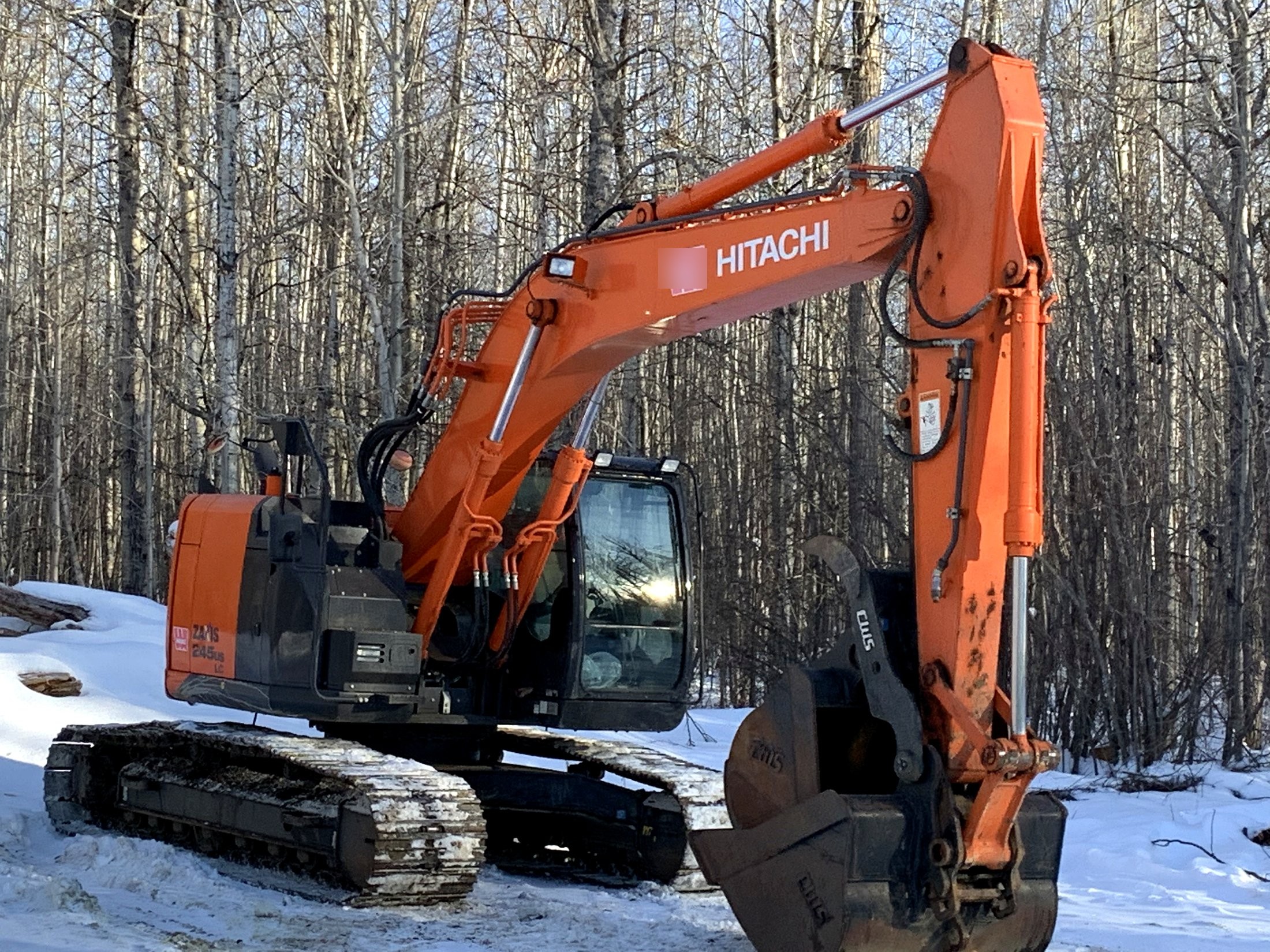
Real fleet, real ground — the conditions independent perception is engineered for.
Authority over the machine is ranked, absolute and auditable. A lower rung can never override the rung above it.
E-stops, the machine's own safeguards and mechanical disengagement. Always wins. No software path around it.
A person at the machine outranks everything downstream of the hardwired layer.
A credentialed remote supervisor — authorize, hold, retreat, stop.
The rules engine and safety logic. Fixed responses, no creative reasoning.
Plans work inside the envelope granted from above. Proposes; never overrides.
AI is used to solve problems inside the rules — never to decide when the rules can be broken. AI may identify a situation; it does not get to invent the emergency procedure.
A live drill spread under light towers, long after dark. Dust, glare, snow and night shifts are the operating reality this architecture is built to face — one reason Eddie perceives through its own sensors, never through the machine's.
Real fleet, real ground — the environment SE is engineered for.
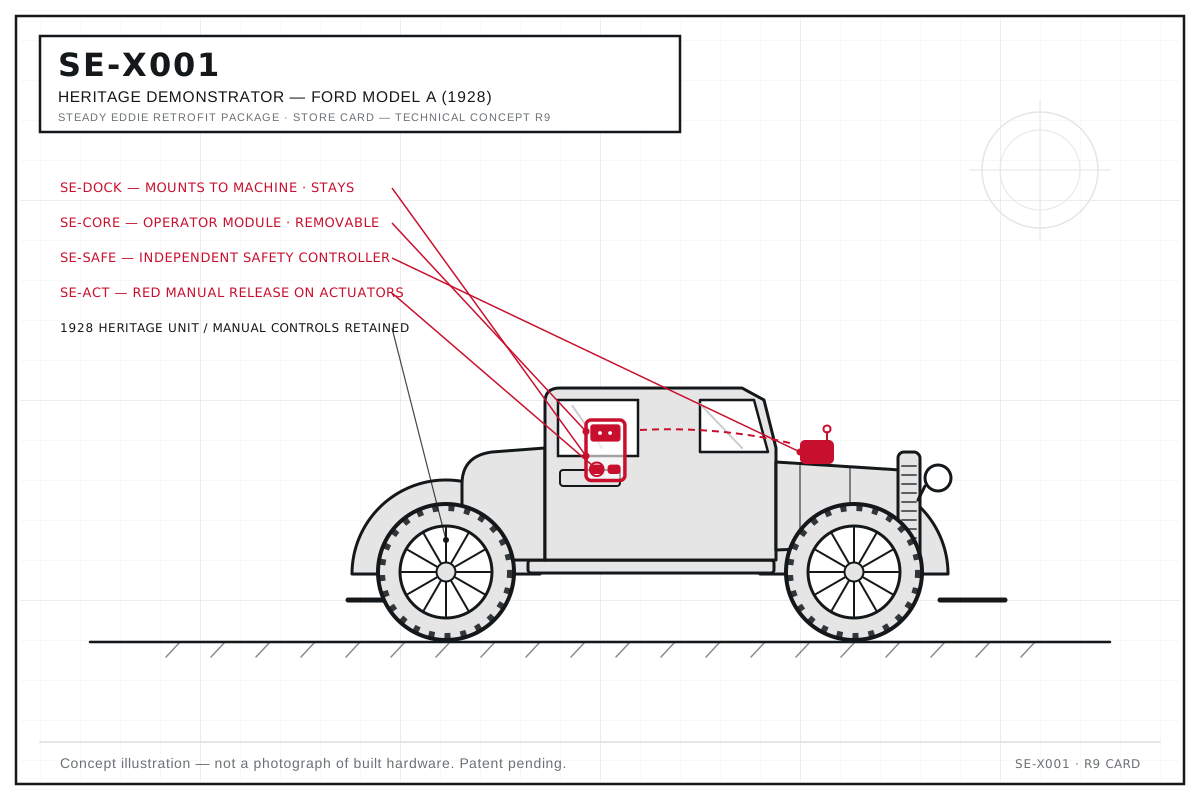
Every component below belongs to SE-X001 "Heritage Demonstrator" — the pack built around a 1928 Ford Model A control layout, carrying a full independent technical and safety review. Steering, brake, clutch and throttle actuation; clamp and split-collar installation only; no drilling into the machine.
Each part carries a real designation in the Steady Eddie part-numbering system — SE-W100 steering-ring family, SE-P200 pedal family, SE-PB100 module carrier, SE-S100 sensor mast, SE-ENC enclosure — the same standardized-module families the whole architecture is built on.
SE-X006, the Caterpillar 320 excavator package, carries the same full independent technical and safety review — the modern bookend to the heritage demonstrator. All forty-four products on the roster are documented to that full GOLD STANDARD — CAD part families, drawing sets, harness sets and install manuals, product by product.










Every part above belongs to the SE-X001 pack, and every part number here appears in the same drawing sets, harness sets and install manuals a machine shop builds from. The part tiles above are placeholder graphics — not photographs or renders of the parts. Photography of the physical hardware is pending; until it is published, the parts are represented by their part numbers and drawing-set documentation only. GOLD STANDARD packages carry FIELD TEST labelling: performance remains subject to field verification on the target machine.
Every machine has a Machine Operating Envelope (MOE). Every site modifies it. Every mission sits inside it. Three rule libraries govern every job — and the AI cannot override any of them.
What this equipment is allowed to do — built by digitizing the machine's approved operating envelope from OEM documentation: permitted slopes, speeds, safe positions, attachment limits, load limits, interlocks. The OEM's native safeguards remain in place; Eddie adds a supervisory layer above them, never a replacement.
Where, and under what conditions — site speed limits, right-of-way, pedestrian separation, restricted areas, weather thresholds, spotter requirements, haul-road direction, task SOPs.
What this particular job authorizes. A human approves each mission into an active authorization envelope — machine, task, area, max speed, duration, exclusions, supervisor, validity. A material change means a new authorization.
The system earns its way A → B → C through validation — customers do not simply select "full autonomy."
Response logic is deterministic — a fixed ladder, not creative reasoning. An unknown vehicle in an active exclusion zone means HOLD. Every state transition is logged in SE BLACKBOX.
Autonomy is staged, not switched on. Every rung runs on the same stack — the same RULESPACE envelope, the same authority hierarchy, the same safety veto — and a machine holds only the rung it has earned.
Above SE-1 the ladder climbs to SE-5 through increasing machine initiative — from supervised task execution to exception-supervised autonomy. The architecture carries every rung today, and each one is earned the same way: validation on the specific machine, then an explicit human authorisation. No rung is ever reached by flipping a switch.
Most industrial machines cluster into a small number of control layouts. Eddie's standardized modules target the archetype, then an SE FIT kit and Machine Profile adapt them to the specific machine — with a stated cross-family reuse target of ≥70% common active hardware between related packs.
Two multi-axis joysticks command travel and implement functions. SE-J modules on both sticks.
Steering wheel, accelerator/brake pedals, forward-neutral-reverse selection and separate implement control. SE-W ring, SE-P pedal modules, SE-L levers.
Two drive levers, one per side, steering by differential motion. Implement authority kept separate from propulsion authority.
Not every machine fits a single letter — the engineering package roster also covers period-specific layouts (1928 Ford Model A), two-station machines (JD 310SL backhoe) and steering-plus-hydraulic layouts (forklift, ag tractor, terminal tractor). See the full 44-product roster.
Steady Eddie's safety architecture is engineered with reference to a defined set of machinery-safety standards — the design disciplines the industrial world already trusts. Standards orientation is an engineering practice, not a certification claim; certification is assessed per machine and per jurisdiction.
Nine interactive browser-based 3D films walk the dock-install and SE-0 → SE-1 deployment sequence, machine family by machine family — excavator to Heritage Model A. Schematic engineering geometry, rendered live in your browser.
Forty-four engineering packs, SE-X001 through SE-X044 — all forty-four GOLD STANDARD engineering-complete — the same stack and the same authority hierarchy, machine by machine.